

Plantains 101
An edible echo of a history that refuses to be forgotten.
You’ve reached Ghetto Gastro. Jon, Les, and P can’t come to the phone right now but subscribe and they’ll get back to you as soon as possible.
The principles of plantains in power, heritage, and home cooking.
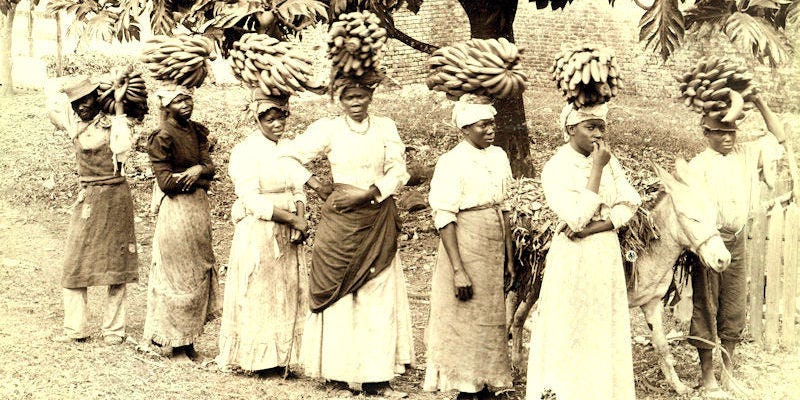
Plantains are one of the most widely used ingredients in the world, familiar in kitchens across continents but less frequently considered beyond their culinary function. Familiar but under-explored, they sit at the intersection of agriculture, migration and everyday cooking, shaping cuisines across Africa, the Caribbean, Latin America and beyond. To understand plantains is to understand how food moves, adapts and carries meaning across time.
For some, plantains first appear as a side dish or a snack, something fried crisp or caramelized sweet, encountered casually rather than studied closely. For others, they’re the crux of a household, waking up to the smell of them frying for tostones or hours spent pounding them into fufu.
Their durability, versatility and nutritional value made them essential to daily life in tropical regions long before they became globally recognizable. As they traveled through trade, forced migration and colonial expansion, they became embedded in new foodways while maintaining their original function as a sustaining staple.
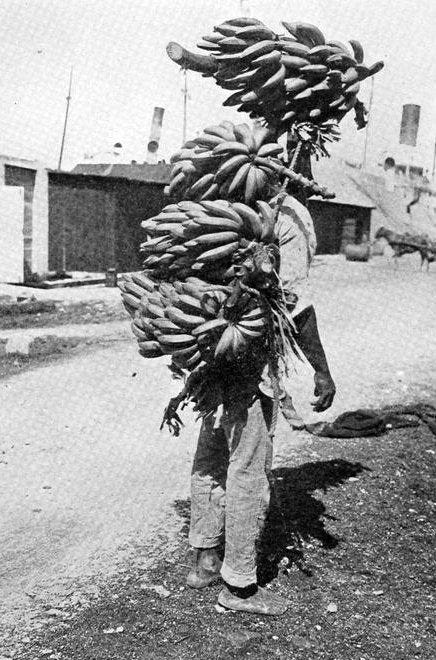
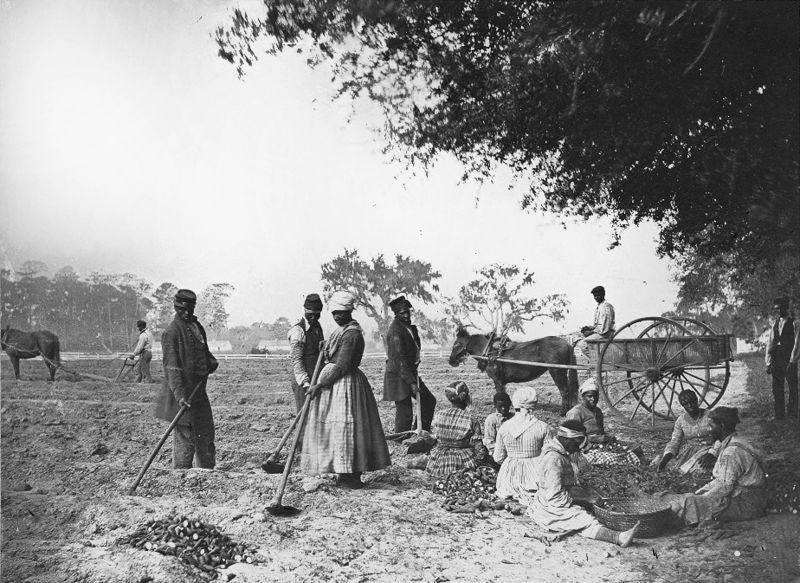
Throughout the African diaspora, plantains reflect a continuity of knowledge. Enslaved Africans brought with them the agricultural understanding required to grow and prepare starchy fruits and tubers like plantains. On plantations in the Caribbean and the Americas, plantains were cultivated alongside yams and cassava to supplement limited rations, forming the backbone of meals that supported survival under extreme conditions.
Cooking was practical and strategic, rooted in preservation and nourishment rather than excess. The type of cooking that defines modern soul food and a deeper historic understanding of our ancestors through their diasporic diets.
Over generations, the ingredients’ commonality evolved. Plantains adapted to local ingredients, regional tastes and shifting cultural identities, anchoring dishes that are now deeply associated with place. Their presence in so many cuisines is not accidental but the result of centuries of cultivation, exchange and resilience. Today, plantains remain central to kitchens across the global Black diaspora, continuing to serve as both food and historical record.
What a Plantain Is (and Isn’t)
Plantains belong to the banana family, but that’s where the resemblance ends. They’re starch-forward, built for heat, meant to be cooked—not peeled and eaten on the go.
They move through stages, starting out green and firm when savory dishes call, shifting to a bright yellow that signifies sweetness is starting to bloom. Plantains further evolve to black when sugars deepen and prepare themselves to be caramelized. There’s no wrong moment to use a plantian—just different intentions.
If you bring them home green, let them be. They’ll ripen slowly on the counter, developing flavor day by day. When they’re where you want them, the fridge will pause the process. And if they go fully black? That’s not failure—it’s potential.
Green plantains hold their own in oil, in boiling water, under pressure. Ripe ones soften, collapse, transform. The same fruit, changing with time, doing what it’s always done, adapting.
A Language Spoken Across Kitchens
Plantains don’t belong to one place. They belong to many—and somehow manage to feel native everywhere they land.
In the Caribbean, they’re mashed, fried, flattened, caramelized. In Puerto Rico and the Dominican Republic, green plantains become mofongo—dense, garlicky, grounding. In Haiti and Cuba, they’re sliced thin or thick, crisped into chips or fritters, eaten with rice and beans, tucked beside stewed meats. Sweet ones turn into maduros, baked or fried until the edges catch a deeper color and the centers melt.
Cross the Atlantic and the conversation continues. In Nigeria and Ghana, dodo hits the plate hot and unapologetic. Kelewele shows up on the street, tossed with ginger and chile, meant to be eaten standing up, fingers slick with oil and spice. Pounded and boiled, plantains stretch into fufu, meant for sharing, scooping, gathering people around the same bowl.
In Southeast Asia, the fruit shifts again and is wrapped, fried, skewered, glazed. Turon in the Philippines—rolled tight with sugar and crunch or banana cue, caramelized and sold curbside. In Indonesia, grilled plantains pair naturally with coconut and rice, slipping easily between sweet and savory.
In South Asia, plantains simmer in coconut milk, meet mustard seed and curry leaf and bulk out vegetarian meals. They turn into fritters, into halwa, into comfort food. Whatever the name, spices added, stews simmered in or stage of ripeness, they carry the same instinct.
It’s never about who does it “right” and always about recognizing the rhythm and role they play on the plate.
Cooking With Intention (and Curiosity)
Plantains don’t ask for perfection, they ask for heat, salt and attention. They reward experimentation and hold flavor without losing their integrity (unless you’re pounding them into dough).
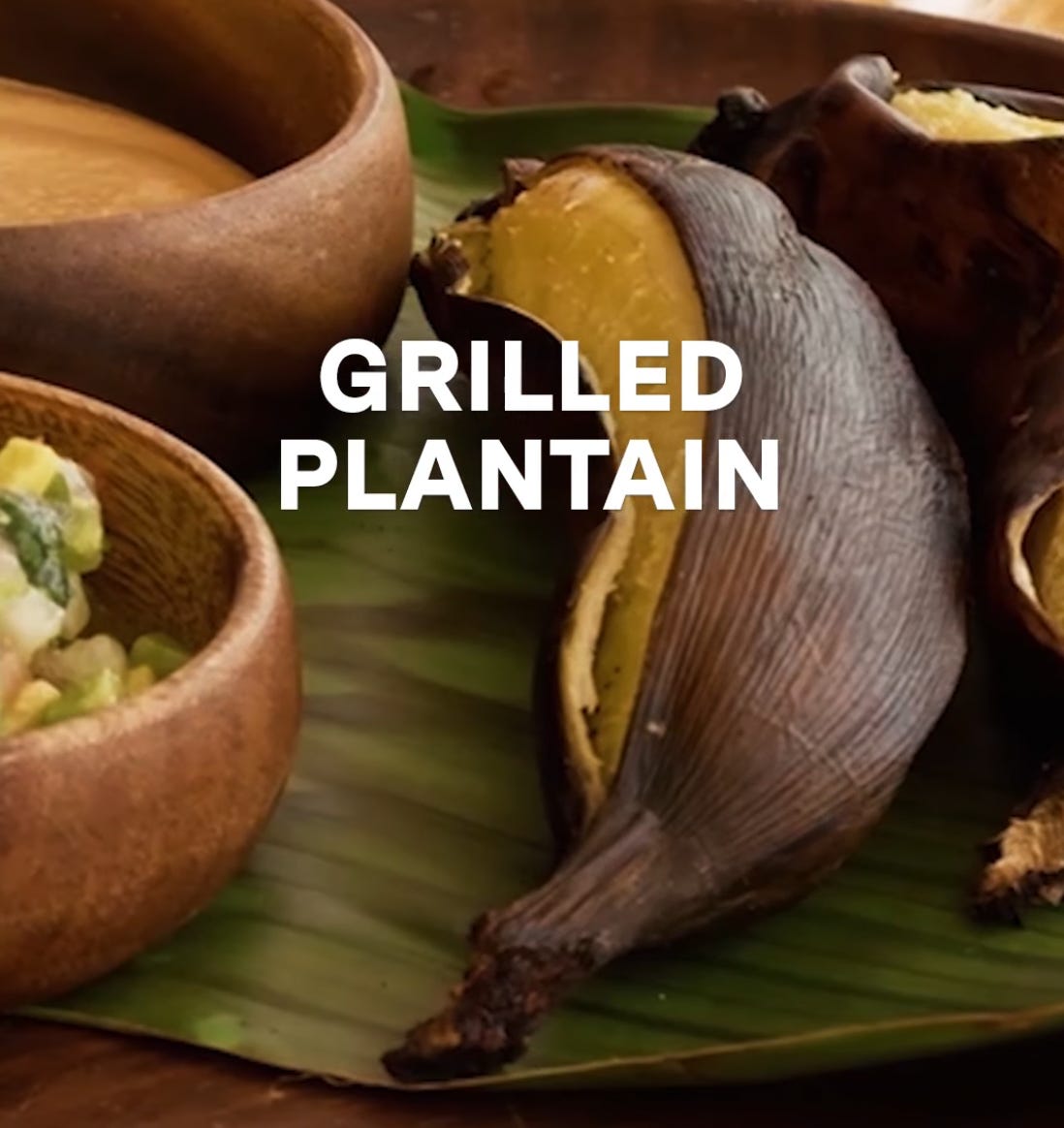
They’re generous in their nutritional makeup—fiber-rich, potassium-heavy, full of vitamins that sustain real meals, beyond just delicious moments. But their real power is how they anchor a plate. The way they can carry spice, balance richness and ground a dish that might otherwise lack depth and density.
Plantains have long served as a foundation because they are responsive rather than fixed. They can be prepared simply or transformed through technique, folded into everyday cooking or shaped into something more elaborate, depending on the needs of the cook and the context in which they are used. This flexibility is not a modern discovery but a continuation of how people have always cooked, relying on intuition, memory and shared knowledge rather than strict prescriptions.
Keeping plantains in the kitchen invites that kind of relationship with food. They reward attention and curiosity, whether fried until crisp, cooked slowly until sweet, or paired with flavors and ingredients that reflect personal taste or cultural inheritance.
Plantains are not a passing interest or culinary novelty. Their presence across global cuisines reflects centuries of migration, adaptation and survival shaped by African agricultural knowledge and diasporic movement. To cook with plantains is to engage with that history, to understand how ingredients carry meaning beyond flavor, and to recognize food as a living record of culture, memory and exchange.
KEEP DIGGING
Apple fritters with maple glaze

Traditional fritters are built on a straightforward flour-based batter. This recipe flips the script by folding in crushed waffles blended with seltzer. That waffle emulsion makes the batter extra light, almost aerated, so when the apple slices hit the oil they puff up with a golden shell that stays tender inside.
The Downlow with DITA

I don’t think clubbing is dying at all, if anything, it’s evolving. The pandemic definitely shifted things, especially for artists trying to tour in Asia, but it also brought people closer together.
 | A guest post by
|
Wow, I really love this piece so much. I’m a Black person, Dominican also American and I like to cook a lot. I often reflect on the ancestral knowledge that’s held within our food, especially across the diaspora. I really appreciate you broadening in
my understanding and deepening my love for plantains. Thank you for this! This is real humanitarian bridging work.